Unity
·
Lead Product Designer
Overview
Unity is the world's leading platform for creating and operating interactive, real-time 3D (RT3D) content.
This project involved me working with a small team of designers to adapt Unity's 'Cloud Foundations' design system to work for artist-focused digital content creation (DCC) experiences.
Cloud Foundations was initially conceived for web dashboards, but there was a company-wide push for broader adoption.
Several aspects of the visual and interaction design needed to be improved to make it more suited to professional and prosumer software aimed at artists.
Outcome
I led a team that developed the Wētā Tools Design Language as a layer on-top of the existing Cloud Foundations design system.
Some of our changes included:
Ensuring the viewport / content is the main focal point - not the UI
Modernising key components to align with the Wētā sub-brand
Refining interaction patterns to align with common practices from other DCCs
This new design language is currently being applied to two unreleased products, and elements of it have been used in the upcoming SpeedTree 10. It was also used to create a vision for the future of Unity's artist-focused world creation workflows.
The work here represents a combination of work-in-progress and concepts which are not final.
My responsibilities
Design system components, Interaction design, Prototyping, Storyboarding, Visual design
Other team members
4 Product Designers
Interactive demo
This demo shows some examples of design language elements, including buttons, sliders, input fields, and a sample 3D model. Note: the sliders do not affect the 3D model in this demo.
Branches
747 tris
Fronds/Fins
420 tris
Leaf meshes
2,136 tris
Total
3,303 tris
SpeedTree
Stylised Birch
Customise
Info
Save variant
Trunk
Branches
Twigs
Default
Standard
Wind
Before and after comparison
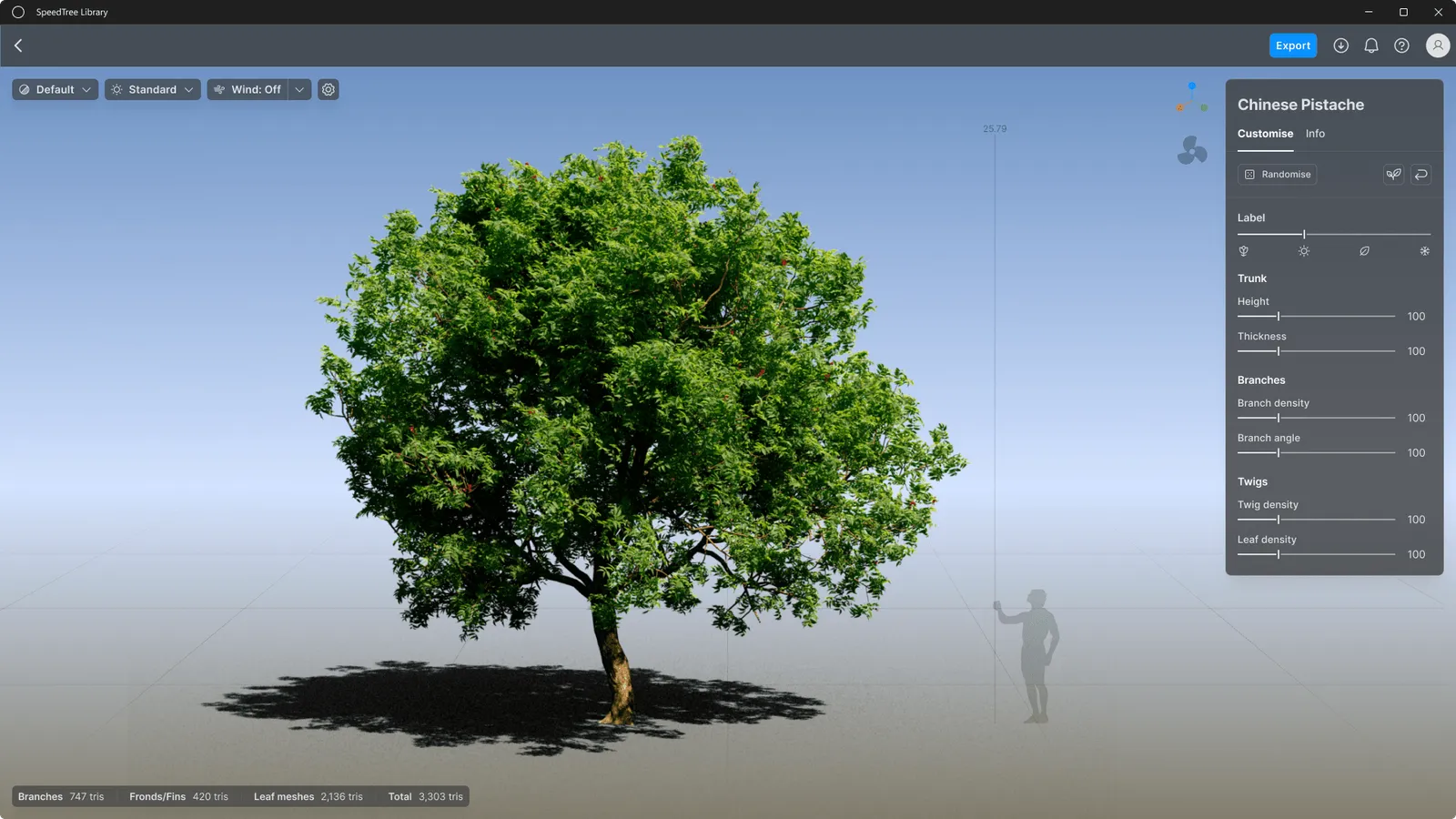
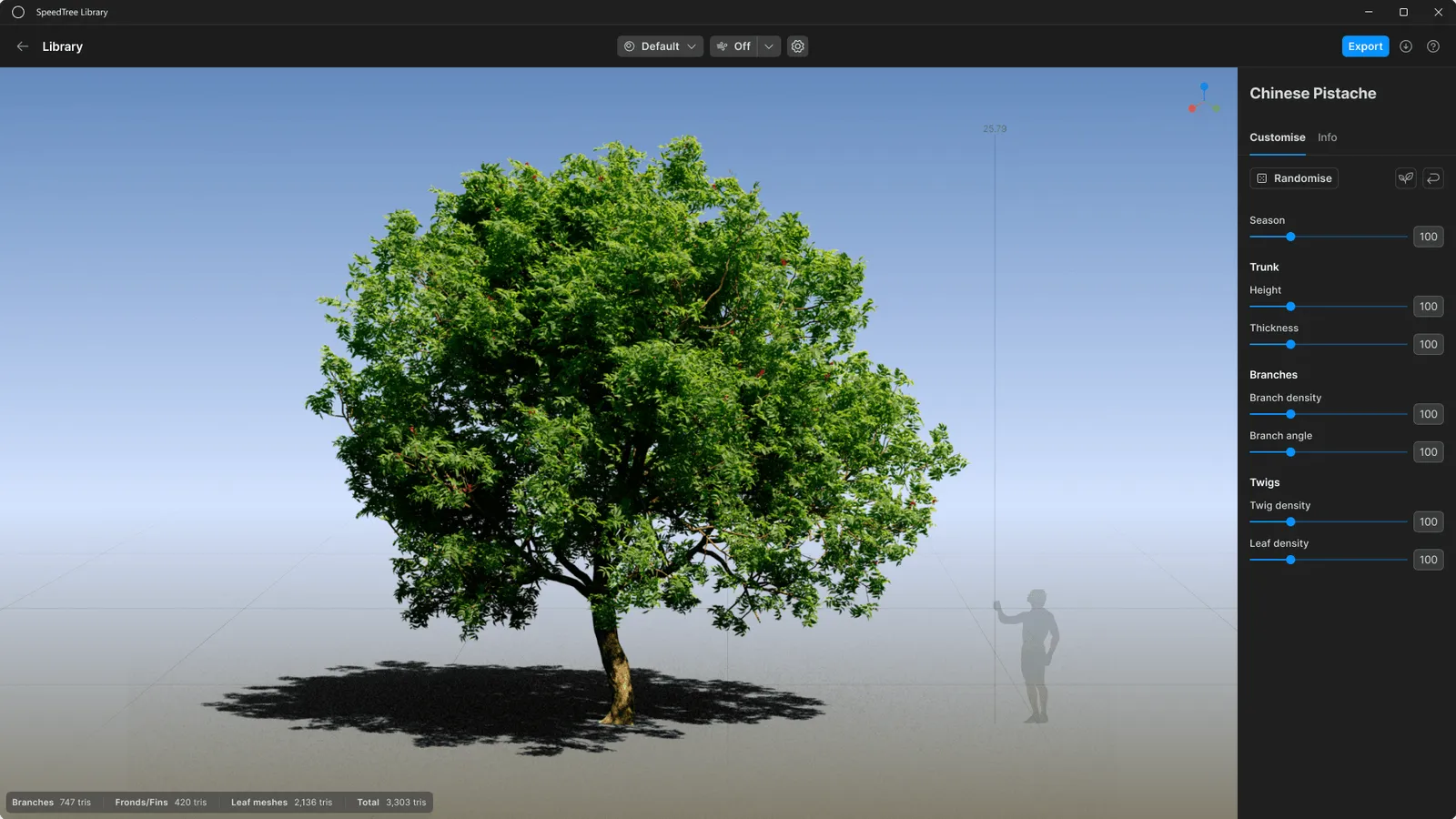
This is a comparison of the SpeedTree Library app. The before image shows the Cloud Foundations design, while the after image shows the new Wētā Design Language applied.
The most significant differences can be seen in the side panel, which has been redesigned to place less emphasis on the UI and allow the artist to focus more on the content in the viewport, whilst also modernising the controls such as the sliders.
After
Before
Ongoing development…
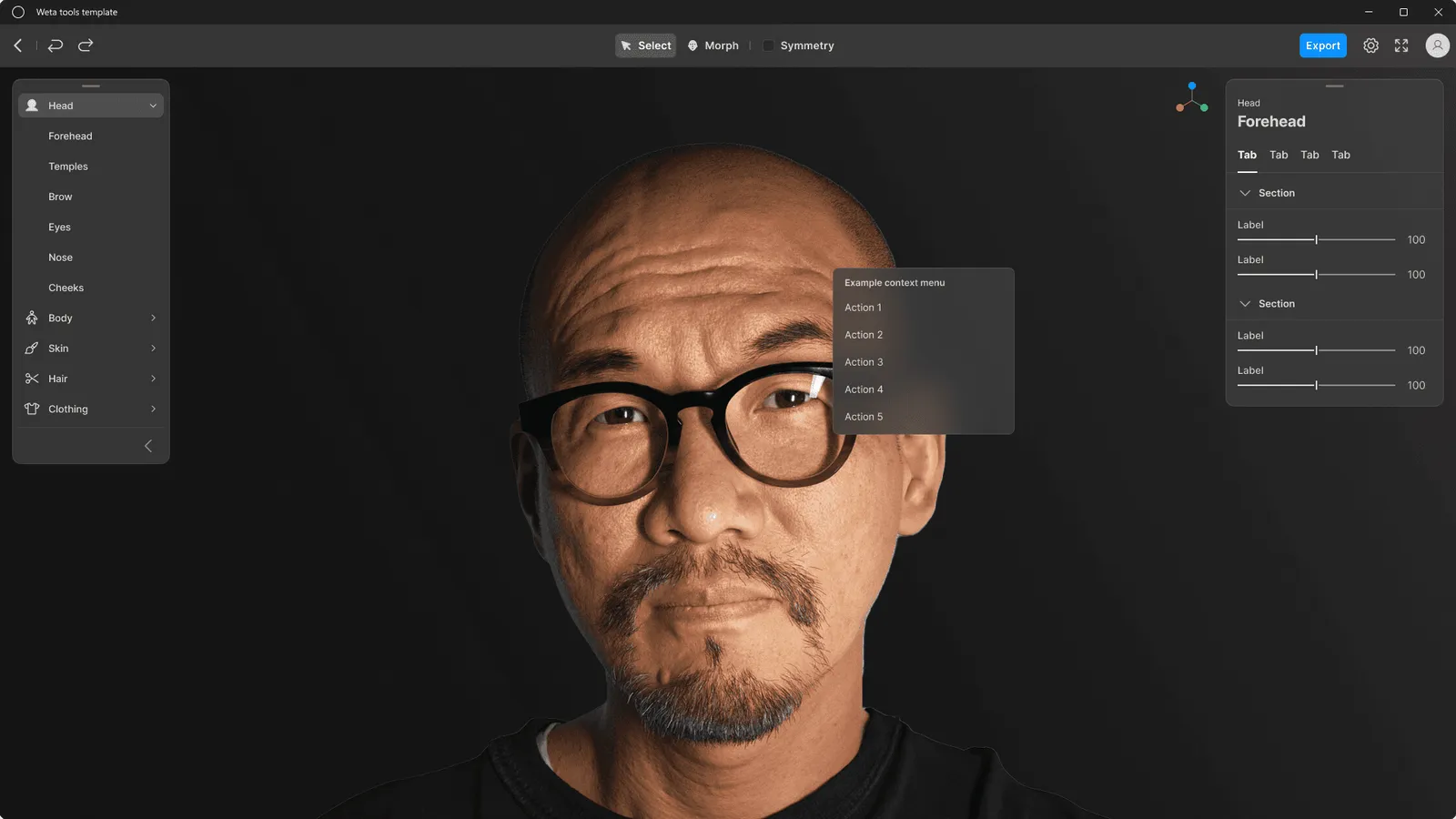
The Design Language is being developed alongside several new products. We are also using it to create a vision for the future of Unity's artist-focused world creation workflows.
Unity
·
Lead Product Designer
Overview
Unity is the world's leading platform for creating and operating interactive, real-time 3D (RT3D) content.
This project involved me working with a small team of designers to adapt Unity's 'Cloud Foundations' design system to work for artist-focused digital content creation (DCC) experiences.
Cloud Foundations was initially conceived for web dashboards, but there was a company-wide push for broader adoption.
Several aspects of the visual and interaction design needed to be improved to make it more suited to professional and prosumer software aimed at artists.
Outcome
I led a team that developed the Wētā Tools Design Language as a layer on-top of the existing Cloud Foundations design system.
Some of our changes included:
Ensuring the viewport / content is the main focal point - not the UI
Modernising key components to align with the Wētā sub-brand
Refining interaction patterns to align with common practices from other DCCs
This new design language is currently being applied to two unreleased products, and elements of it have been used in the upcoming SpeedTree 10. It was also used to create a vision for the future of Unity's artist-focused world creation workflows.
The work here represents a combination of work-in-progress and concepts which are not final.
My responsibilities
Design system components, Interaction design, Prototyping, Storyboarding, Visual design
Other team members
4 Product Designers
Unity
Lead Product Designer
Overview
Unity is the world's leading platform for creating and operating interactive, real-time 3D (RT3D) content.
This project involved me working with a small team of designers to adapt Unity's 'Cloud Foundations' design system to work for artist-focused digital content creation (DCC) experiences.
Cloud Foundations was initially conceived for web dashboards, but there was a company-wide push for broader adoption.
Several aspects of the visual and interaction design needed to be improved to make it more suited to professional and prosumer software aimed at artists.
Outcome
I led a team that developed the Wētā Tools Design Language as a layer on-top of the existing Cloud Foundations design system.
Some of our changes included:
Ensuring the viewport / content is the main focal point - not the UI
Modernising key components to align with the Wētā sub-brand
Refining interaction patterns to align with common practices from other DCCs
This new design language is currently being applied to two unreleased products, and elements of it have been used in the upcoming SpeedTree 10. It was also used to create a vision for the future of Unity's artist-focused world creation workflows.
The work here represents a combination of work-in-progress and concepts which are not final.
My responsibilities
Design system components, Interaction design, Prototyping, Storyboarding, Visual design
Other team members
4 Product Designers
Interactive demo
This demo shows some examples of design language elements, including buttons, sliders, input fields, and a sample 3D model. Note: this demo is not available on mobile devices.
Before and after comparison
This is a comparison of the SpeedTree Library app. The before image shows the Cloud Foundations design, while the after image shows the new Wētā Design Language applied.
The most significant differences can be seen in the side panel, which has been redesigned to place less emphasis on the UI and allow the artist to focus more on the content in the viewport, whilst also modernising the controls such as the sliders.


After
Before
Ongoing development…
The Design Language is being developed alongside several new products. We are also using it to create a vision for the future of Unity's artist-focused world creation workflows.


